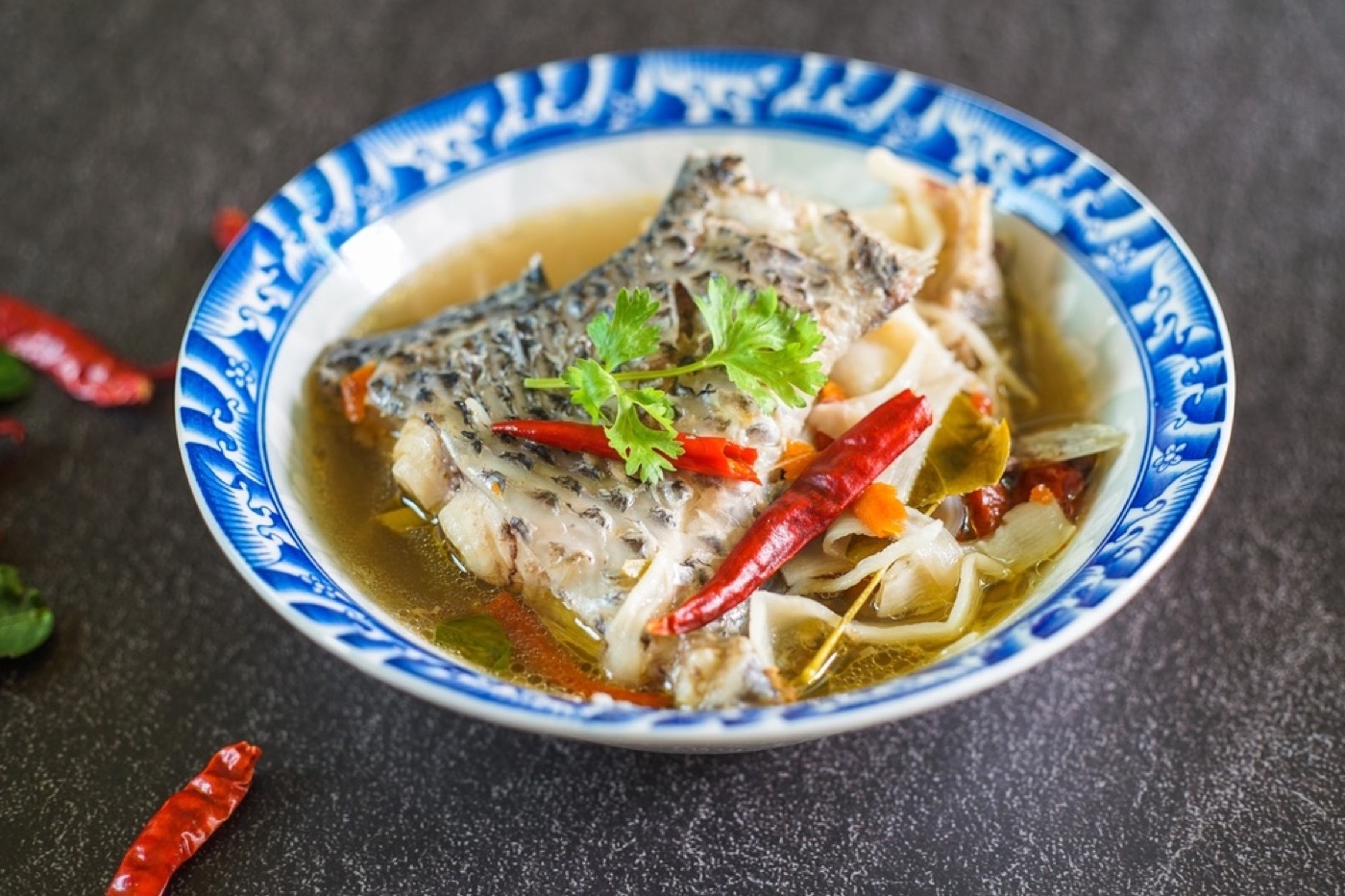
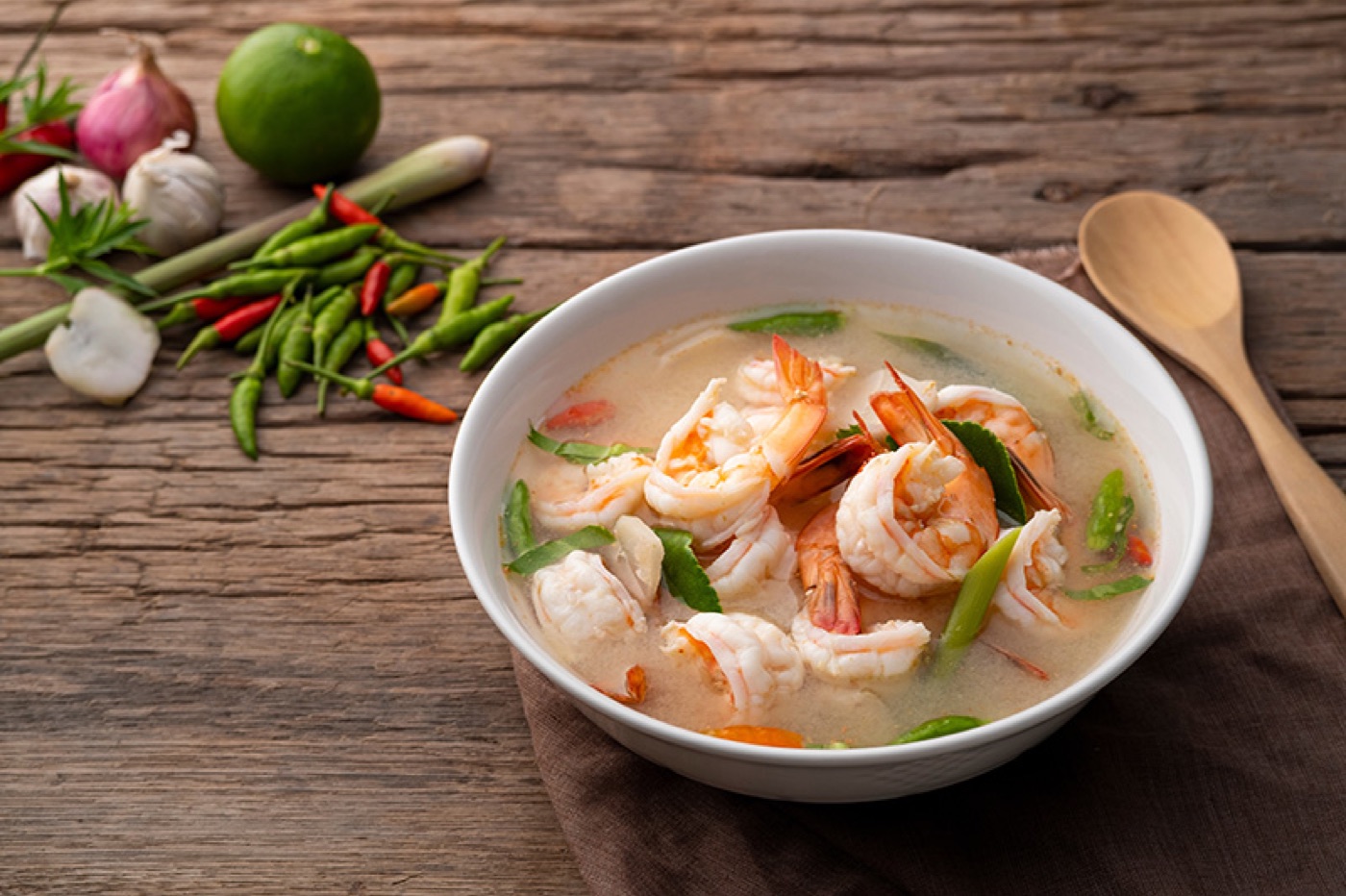
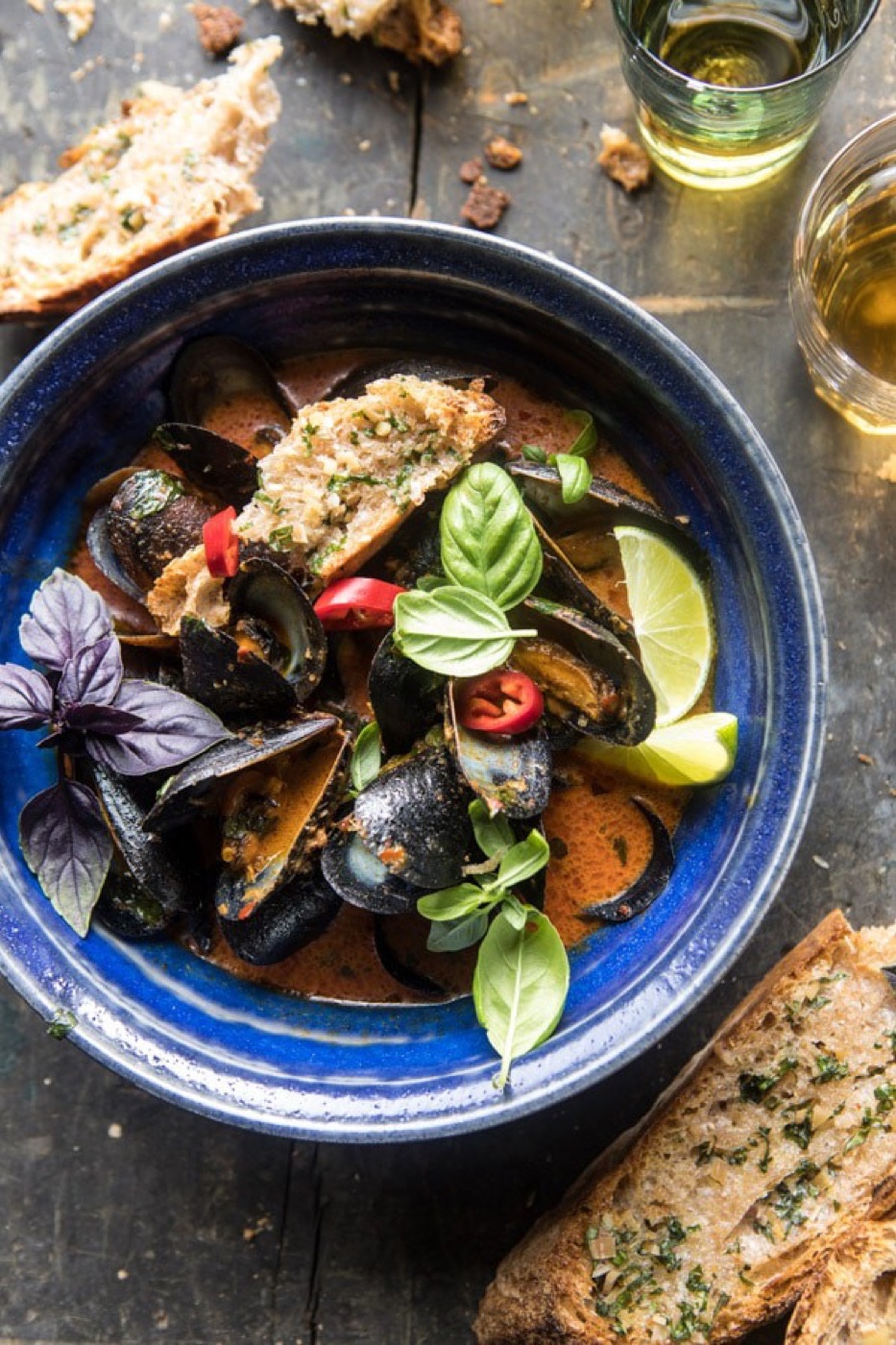
Lemongrass (Thai takrai, Vietnamese sả, Malay serai) is a tall, tough grass whose pale lower stalk smells of lemon and ginger with a floral, almost soapy edge, but with none of lemon's acidity. It flavors tom yum and tom kha, every Thai curry paste, Vietnamese bún thịt nướng and lemongrass chicken, Malaysian rendang and Indonesian sambals, and it steeps into a clean, cooling tea.
How to buy
Fresh stalks are sold in bunches of 3–5 at Asian grocers and most large US and UK supermarkets, usually near the fresh herbs (Whole Foods, Kroger, Tesco and Sainsbury's carry it). Choose heavy, firm stalks with a plump, pale bulb and tightly wrapped layers; avoid dry, papery, brown-tipped ones, which have already lost their oil. Frozen chopped lemongrass from Thai grocers is a good backup for pastes and marinades. Tubes of lemongrass paste and dried slices are much weaker and taste hay-like.
How to store
Wrap stalks in a damp paper towel inside a bag and refrigerate for up to 2 weeks; standing them in a glass of water on the counter also keeps them fresh for a week. For long storage, trim and cut them into 2-inch pieces or mince the tender bulb, then freeze in a zip bag for 6 months—frozen lemongrass minces more easily than fresh. Throw out stalks that are slimy, moldy or have gone gray and scentless.
Substitutes
- Lemon zest + a sliver of fresh ginger: zest of ½ lemon and a coin of ginger per stalk. Brighter and sharper, missing the floral, grassy depth.
- Frozen or paste lemongrass: frozen 1:1; paste, 1 tablespoon per stalk. Paste is fine in marinades and curry paste but tastes flat in clear soup.
- Makrut lime leaves: 2 leaves per stalk in soups and curries. More perfume, less lemon; still unmistakably Southeast Asian.
- Lemon verbena or lemon balm: a small handful per stalk, added at the end. Good for tea and desserts, too delicate for curries.
How to use
Cut off the root end and the dry green top so you keep roughly the bottom 5–6 inches, and peel away the one or two tough outer layers. For soups and braises, bruise the stalk—smack it with the back of a knife or a pestle until it splits and smells strongly—then cut it into 2-inch lengths and add it at the start; fish the pieces out before serving, since they stay woody. For pastes and marinades, use only the tender pale core: slice it paper-thin across the grain first, then mince or pound with salt; thick slices leave splinters in the finished dish. One stalk flavors about 4 cups of soup or a marinade for 500 g of meat.
By Mia Ko · Updated